
Priority blindness happens when a GPU cluster schedules jobs by arrival time instead of business value. A low-priority experiment can occupy 16 GPUs all weekend while a revenue-critical retraining job waits. The fix is priority-aware scheduling. Rank workloads by business value, preempt low-value jobs automatically, and reclaim idle capacity through quotas. Enterprises that make this switch can improve GPU utilization and reduce avoidable waste.
A Familiar Monday Morning
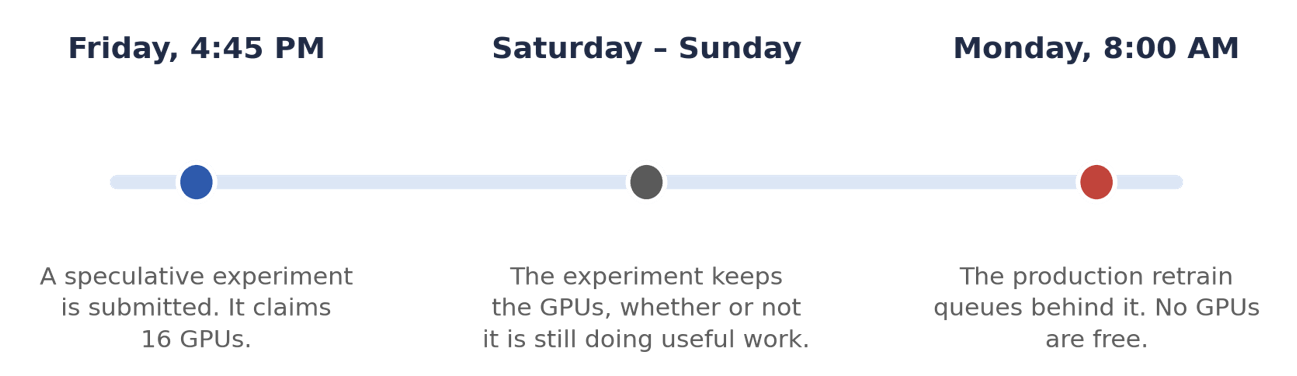
Picture a typical enterprise AI team. On Friday afternoon, a data scientist kicks off a speculative experiment, a “what if” test that nobody explicitly approved as urgent. It grabs 16 GPUs and settles in for the weekend.
On Monday, the fraud-detection model needs retraining before a product launch. The team checks the scheduler and sees every GPU already reserved. Support tickets are created. Then leadership asks why a costly cluster cannot support the work that drives revenue.
Nothing in this story involves broken hardware or an under-sized cluster. Instead, the scheduling policy is the problem. First-come, first-served scheduling treats a speculative test and a launch as equal. It has no concept of business importance. This scenario appears in many shared AI environments. It has a name: priority blindness.
What Is Priority Blindness in GPU Scheduling?
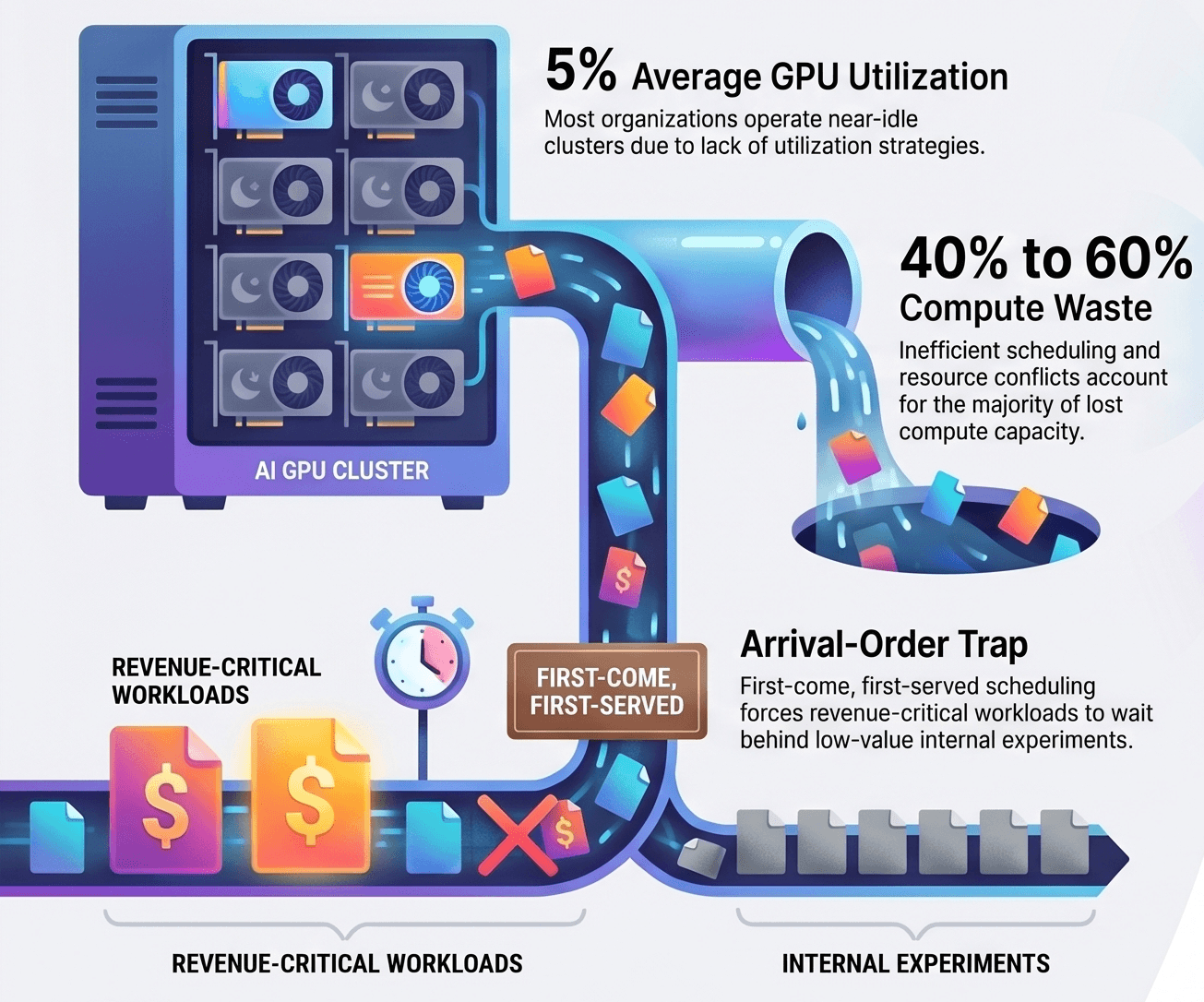
Priority blindness is a scheduling failure where a cluster runs jobs in the order that they arrive rather than in the order they matter to the business. A 2026 Cast AI analysis of tens of thousands of clusters put average GPU utilization for AI and machine learning workloads at just 5%, meaning most organizations already run near-idle clusters before priority blindness compounds the waste.
According to ClearML’s State of AI Infrastructure at Scale 2025-2026 report, 44% of enterprises still assign GPU workloads manually or have no defined utilization strategy at all. In practice, that means most scheduling systems cannot tell a revenue-critical retrain from a weekend side project, so the newest request wins regardless of what it is worth.
Why Does First-Come-First-Served Scheduling Hurt the Business?
First-come, first-served scheduling looks fair on paper. Every job gets equal treatment, and the queue is easy to explain. However, equal treatment is the problem. It hurts the business in three ways.
- Revenue-critical work waits behind internal experiments. The scheduler cannot interrupt low-value jobs once they start. Therefore, urgent work stays queued.
- Engineers learn to game the queue. When early submission guarantees capacity, teams over-request GPUs “just in case”. As a result, planning gets distorted.
- Waste compounds as the fleet grows. RunPod estimates that poorly managed clusters waste 40% to 60% of compute resources through inefficient scheduling, resource conflicts, and poor workload placement.
Ultimately, none of this is a hardware limitation. A CTO can double the number of GPUs, yet the same arrival-order queue will still let a low-value job block a high-value one. Therefore, organizations that fix this problem treat it as a policy question, not a procurement one.
What Priority-Aware Scheduling Requires
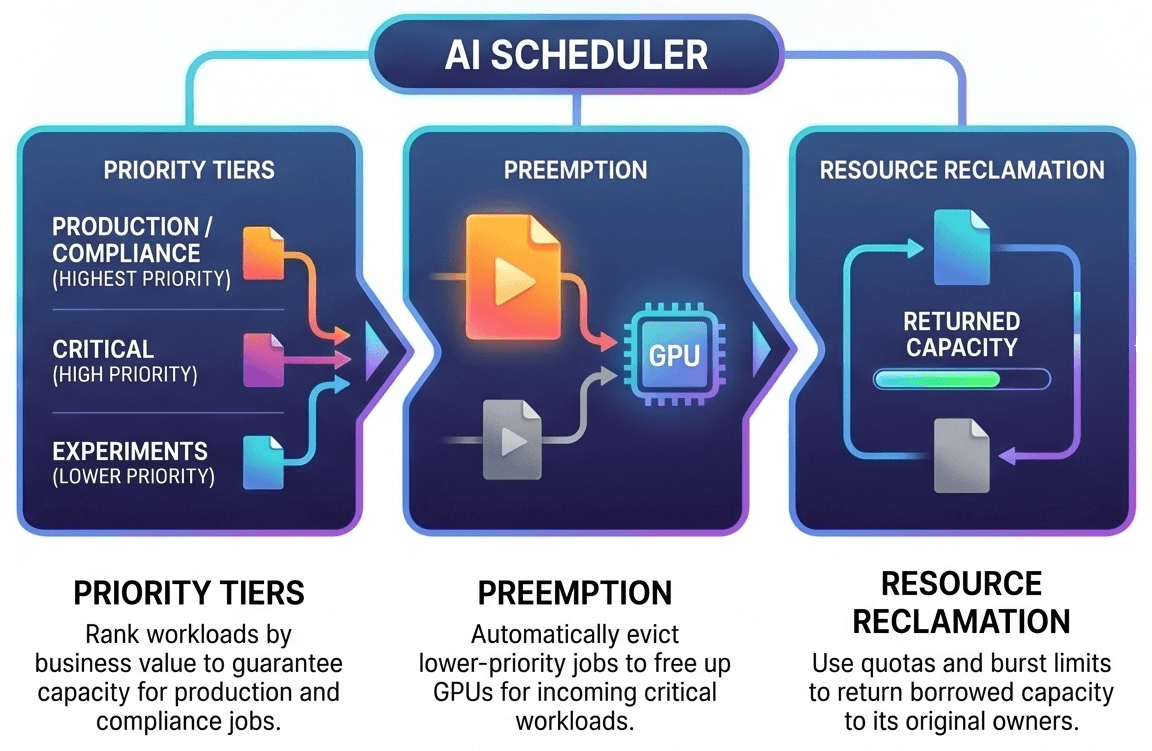
A scheduler that understands business value needs three capabilities. It needs priority tiers, preemption with checkpointing, and resource reclamation. Remove one capability, and the others lose impact.
1. Priority Tiers
Priority tiers rank workloads by business value instead of submission time. Production inference, compliance batch work, and time-sensitive retraining sit in a protected top tier, while research and exploratory jobs sit lower. As a result, lower-value workloads can be interrupted when higher-value work needs capacity.
2. Preemption
With Checkpointing
Preemption is what turns a priority label into an enforceable policy. In Kubernetes, teams assign a higher PriorityClass to production workloads so the scheduler can automatically evict lower-priority pods when capacity runs short. Without preemption, priority tiers are just labels; nothing forces a low-value job to give up its GPUs.
Babak Salamat, a software engineer on Google Kubernetes Engine, described the earlier problem clearly. Before priority and preemption, pods ran on a first-come, first-served basis. As a result, less important workloads could block more important ones that arrived later.
Without Checkpointing
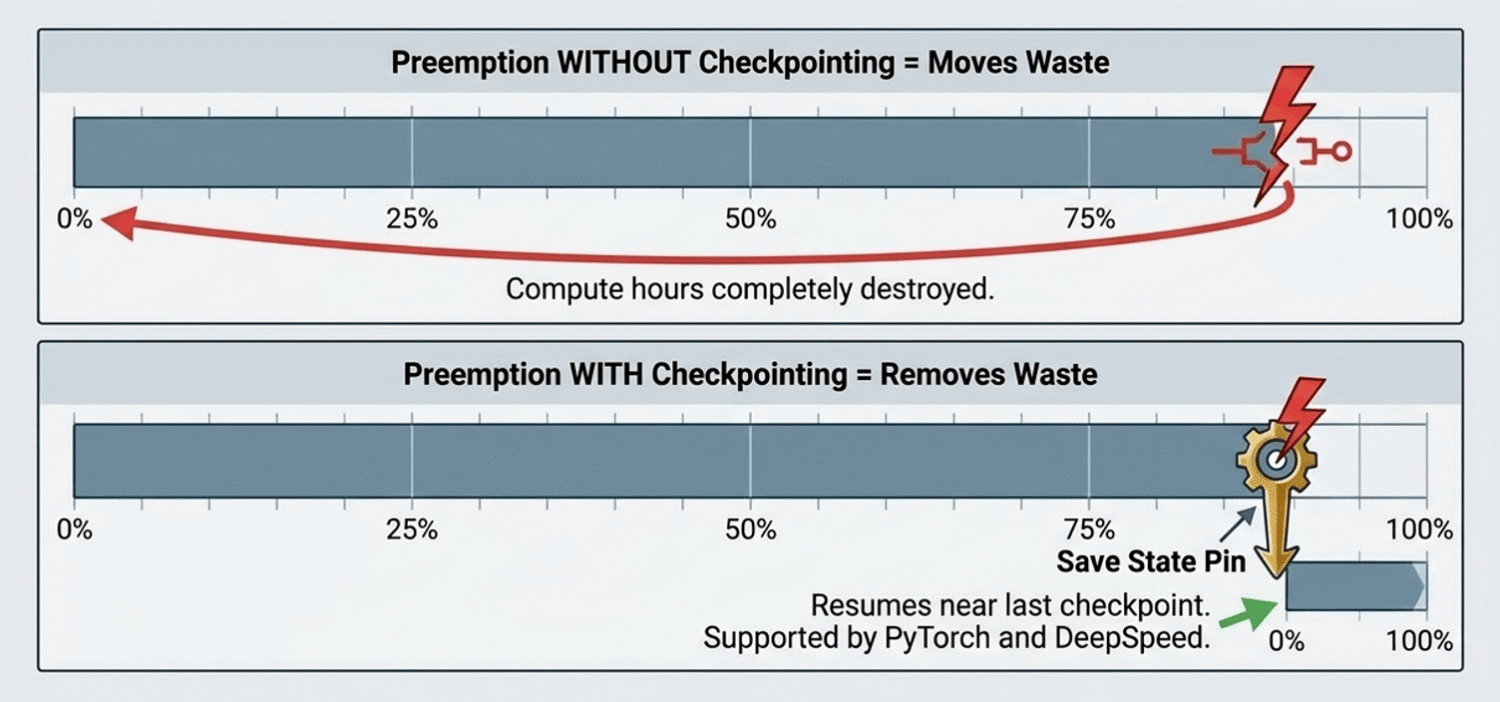
Preemption without checkpointing moves waste instead of removing it. If a job trains for six hours and restarts, the team loses six hours of work. Checkpointing saves model state, optimizer state, and progress at regular intervals. Therefore, a preempted job resumes near its last checkpoint instead of starting over.
Most training frameworks support checkpointing during training. These include PyTorch and DeepSpeed. In addition, pairing checkpointing with a preemption policy makes preemption safe to enable broadly. As a result, teams do not need to reserve preemption for jobs no one minds losing.
3. Resource Reclamation
Resource reclamation closes the loop. Without quotas and reclamation rules, one exploratory job can consume the cluster and starve production inference. Strong quota systems set a guaranteed minimum per team while allowing controlled bursts into unused capacity. When the original owner submits new work, borrowed capacity returns automatically.
How Much Can Priority-Aware Scheduling Save?
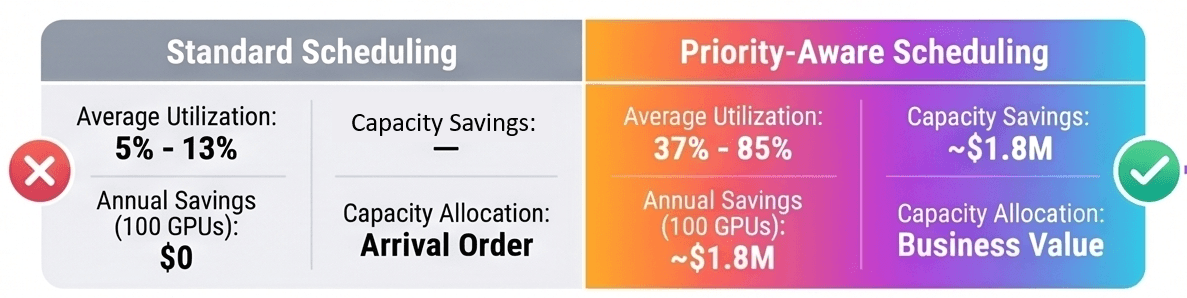
The gap between standard and priority-aware scheduling is not incremental. It is the difference between a cluster that mostly idles and one that mostly works.
Sysart estimates that raising utilization from 60% to 85% on a 100-GPU H100 cluster saves roughly $1.8M a year. At enterprise scale, with multiple clusters, that figure reaches eight figures.
Production case studies from CNCF member organizations back this up: according to CIO, advanced Kubernetes GPU scheduling has lifted utilization from 13% to 37%, with some teams pushing past 80%.
Idle capacity savings are only part of the return. The higher cost is slower iteration. When engineers wait days for GPU access, research slows and competitive advantage erodes.
The teams that win with AI infrastructure rarely own the most GPUs. They run the right policies. Consequently, the right jobs run at the right time.
Three Key Takeaways
What is priority blindness in GPU scheduling? Priority blindness occurs when a cluster schedules GPU jobs by arrival time rather than business value. A low-priority experiment can block a high-priority production retraining job simply because it started first. Priority tiers and preemption policies fix this by ranking jobs on what they are worth to the business.
What is GPU preemption, and why does it matter? GPU preemption lets the scheduler interrupt a lower-priority job and reassign its resources to a higher-priority one. This means critical workloads can automatically reclaim capacity instead of waiting behind lower-value work. Without preemption, priority labels exist on paper but never change what actually runs.
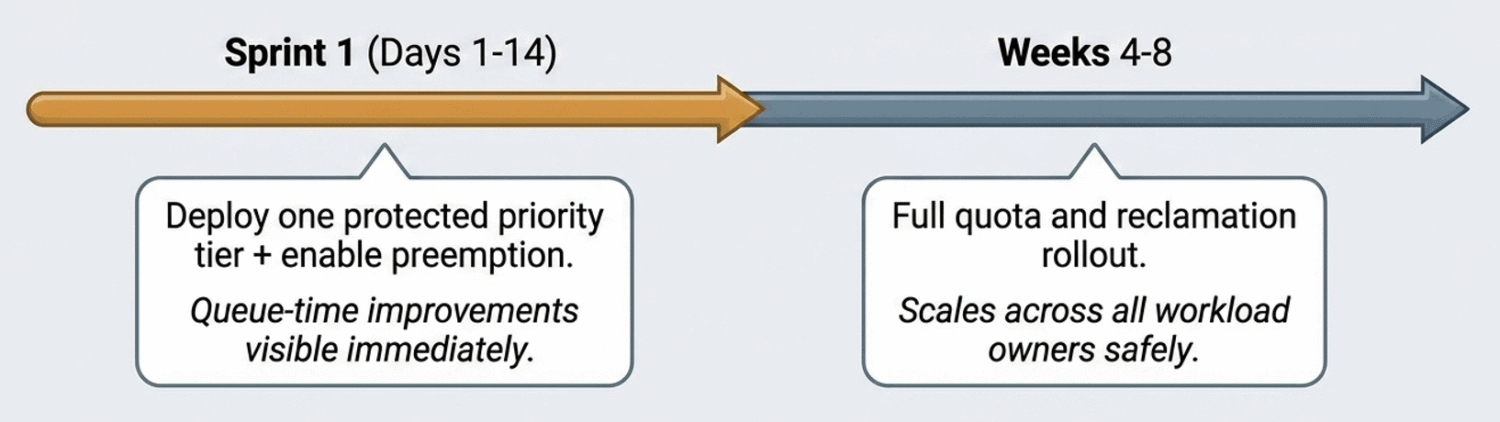
How quickly can you expect results after adopting priority-aware scheduling? Teams that start with one protected priority tier and enable preemption for it typically see queue-time improvements within the first sprint. Full quota and reclamation rollout across every team usually takes four to eight weeks, depending on how many workload owners need onboarding.
Next Steps
If your AI team is waiting on GPUs while low-value jobs keep running, the fastest fix is to review your scheduling policy, not order more GPUs. Priority blindness is a policy problem, and it is a fixable one.
At Highfens, we help organizations turn GPU scheduling from a bottleneck into a business advantage. If your team wants to protect critical AI workloads, reclaim wasted capacity, and avoid buying GPUs you may not need.
Which resource bites first in your environment: CPU, storage, or network?