
I recently attended Qlik Connect 2026 in Orlando as a delegate for Tech Field Day, an experience that provided a front-row seat to the rapidly evolving intersection of data, analytics, and artificial intelligence. A highlight for me was participating in a panel for the Utilizing AI podcast, hosted by Stephen Foskett and featuring Sidney Drill, Qlik’s Solution Director. Our discussion centered on a pivotal shift in the market: the transition from AI as an experimental novelty to a governed, operational powerhouse capable of driving agentic action.
Defining the Market: From "Plumbing" to Immediate Accessibility
Sidney defines the data analytics market as serving “everybody,” using the analogy of plumbing to describe how data is moved from diverse sources. Such as logistics trucks or retail cashiers into a safe, central location.
She notes that the primary challenge has shifted from simply gathering data to ensuring it reaches the right people at the right time. In the modern market, users like sales managers often have only five minutes to look at data, requiring systems that can immediately surface risks and pipeline opportunities.
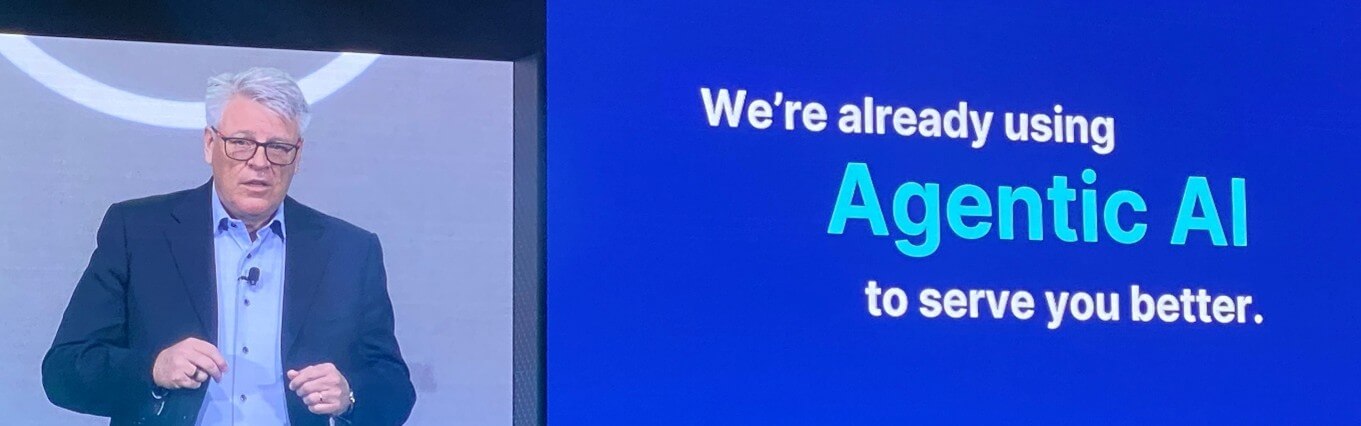
To address these market demands, Qlik introduced Qlik Agentic Advisory to help enterprises move from “rough agentic concepts” to “execution-ready use cases.” This advisory service uses a “sell-or-save” lens to help organizations prioritize AI initiatives that will either drive revenue or reduce costs.
By focusing on outcomes and KPIs, Qlik helps bridge the gap between ambitious AI ideas and the operational reality of the data “plumbing” required to support them.
The Critical Role of Trust and Data Literacy
A major theme of the discussion is that AI has brought the long-standing issues of trust and data privacy to the forefront of the business world. Sidney emphasizes that data literacy is essential because users must understand where AI-generated answers come from and whether they are verifiable. She warns that in an AI-driven market, “garbage in, garbage out” becomes a higher risk, necessitating automated data quality checks to ensure the foundation remains reliable.
Qlik has operationalized this need for trust by introducing the Qlik Trust Score™, which provides a visible signal of a data product’s accuracy, timeliness, diversity, and completeness. Furthermore, the new Data Quality Agent enables teams to manage trust workflows and detect anomalies via natural-language interactions.
This ensures that as AI moves from providing answers to taking actions, “weak data stops being a reporting problem and becomes an execution problem.”
Governance and the AI Sovereignty Initiative
Sidney argues that organizations must “take a beat” on governance to ensure that data remains secure as they rush toward AI adoption. It is critical that security frameworks ensure data is only accessible to authorized users and now, authorized AI agents.
This is especially vital for highly regulated industries such as healthcare and government, where the “gold” (sensitive data) must be protected against unauthorized leaks.
The focus on control is a pillar of the Qlik AI Sovereignty Initiative, which was designed for a fragmented AI landscape where data residency and policy requirements are strict constraints. Qlik has expanded its regional cloud deployments to locations such as Israel, São Paulo, and the UAE to help customers maintain local presence and jurisdictional control. This initiative ensures that enterprises can pair governed data with traceable reasoning while maintaining full architectural choice.
Shifting to Agentic Analytics and Scalable Action
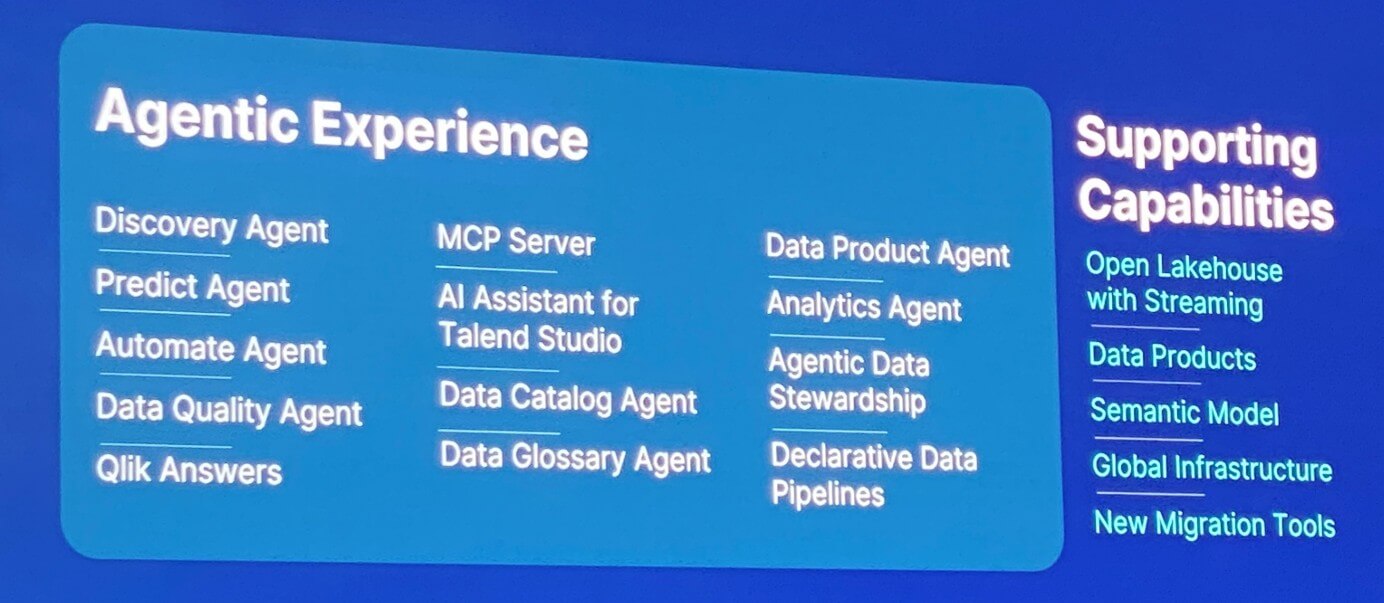
The conversation explores the shift toward agentic analytics, where specialized agents perform tasks that previously required a data scientist. Sidney highlights the Qlik Predict agentic interface, which allows users to ask forward-looking questions in “normal speak” (e.g., “What is our expected on-time delivery for next quarter?”).
Unlike simple chatbots, these agents follow rigorous data science best practices to construct conventional queries that are reliable and scalable.
This agentic approach extends across the entire data lifecycle. The Discovery Agent monitors data for anomalies, while the Automate Agent triggers workflows in downstream systems based on AI reasoning. Since its release, the Discovery Agent has already surfaced over 100,000 discoveries for customers, demonstrating the market’s move toward proactive, automated insight.
The Three Pillars: Context, Trust, and Freedom
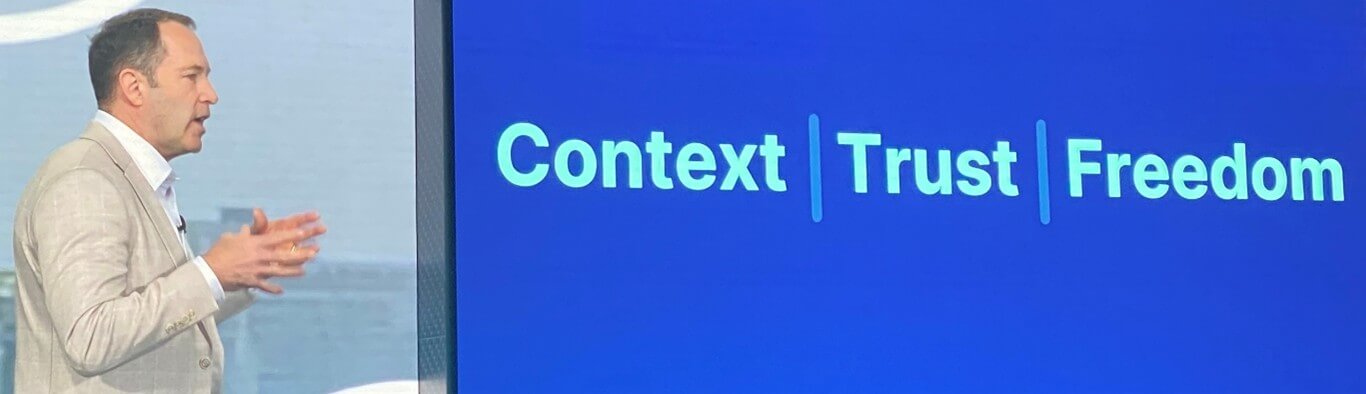
Qlik’s market strategy can be seen through three core pillars:
- Trust (confidence in the data),
- Context (understanding business logic)
- Freedom (architectural flexibility).
Trust focuses on making trust operable by positioning data products as the core unit of reliability and providing visible signals to measure accuracy and timeliness.
Context is provided through semantic layers and shared business definitions, ensuring agents understand the specific terminology of an organization.
Freedom refers to an organization’s ability to move between different Large Language Models (LLMs) and tools without being locked into a single vendor.
Qlik supports this freedom through an open data architecture and the MCP (Model Control Protocol) Server, which allows third-party AI assistants to access Qlik’s context-rich calculations. By grounding AI answers in a business context and supporting them with explainable reasoning, Qlik helps organizations avoid “vendor lock-in” as they scale their AI initiatives.
Practical AI Use Cases and Real-World Impact
Our discussion concludes with real-world examples of AI and analytics delivering measurable value, such as FinOps (Cloud Financial Management).
Sidney shared a case where anomaly detection identified a spike in AWS costs, ultimately saving the organization $300,000 a year. Another highlighted use case included the UN tracking climate emissions, predictive maintenance on factory floors, and the use of logistics data at UPS to optimize service patterns.
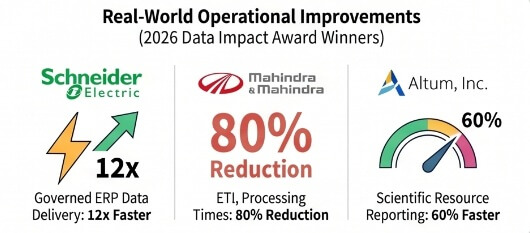
The 2026 Data Impact Awards further showcase this “practical AI” in action. For instance, HelloFresh won the AI Innovation Award for using predictive models to detect delivery risks and reallocating five employees to higher-value tasks through automation. These winners demonstrate that the most successful organizations focus on building trusted data foundations that make advanced analytics practical at scale.
Conclusion
Qlik Connect 2026 announced a shift from AI hype toward agentic action built on the pillars of trust, context, and freedom. Achieved by leveraging a trusted data foundation and specialized tools such as the Discovery Agent.
Qlik is enabling enterprises to transition from “irrational exuberance” into governed, execution-ready workflows. Ultimately, grounding AI in shared business meaning transforms it into a “superpower” for democratizing intelligence and driving measurable performance across the organization.